

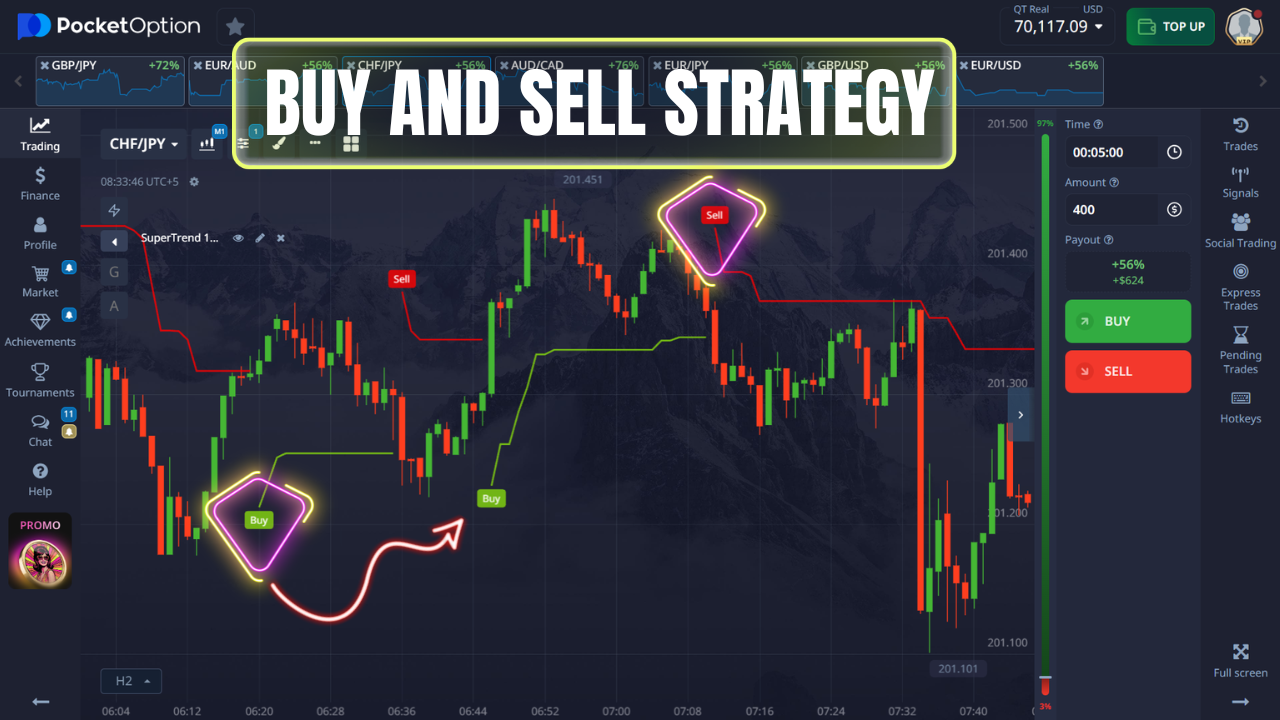

In the competitive world of online trading, mastering a Pocket Option buy and sell strategy is essential for traders who aim to achieve consistent and controlled results. We focus on precision, discipline, and structured execution. A well-defined strategy removes emotional decisions and replaces them with calculated entries and exits based on market behavior, trend confirmation, and risk control.
This comprehensive guide presents a professional buy and sell strategy for Pocket Option, structured for clarity, performance, and sustainable growth.
Understanding the Core of Pocket Option Buy and Sell Strategy
The foundation of any profitable trading approach lies in identifying clear market direction, defining precise entry points, and executing trades with disciplined timing.
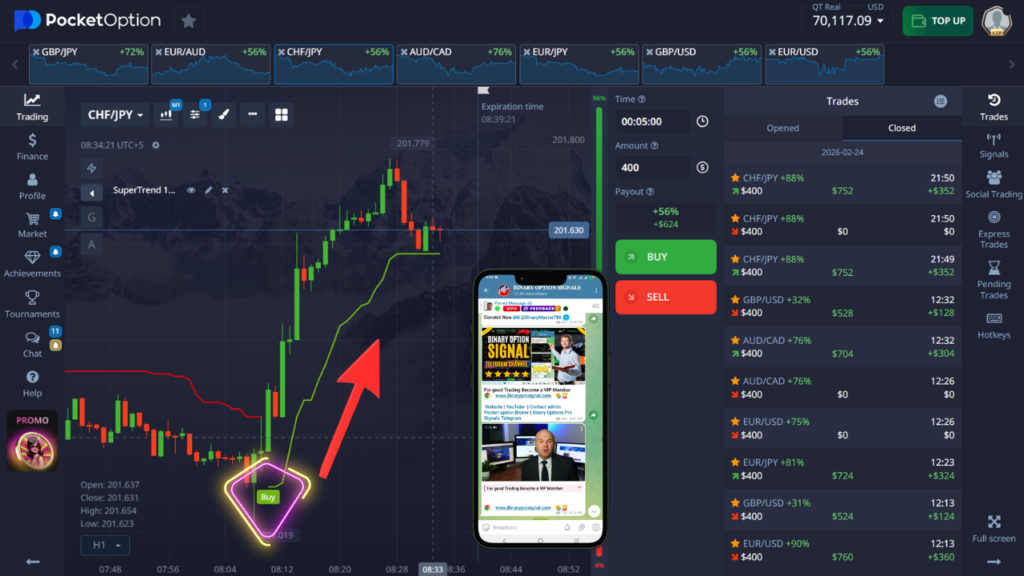
A buy trade is executed when we anticipate that the asset price will rise within a selected expiration time. A sell trade is placed when we forecast that the price will decline before expiration.
The key elements that make this strategy effective include:
- Trend identification
- Support and resistance levels
- Momentum confirmation
- Candlestick behavior
- Risk management discipline
When these elements align, the probability of a successful trade increases significantly.
Step 1: Identifying Market Trend for Buy and Sell Entries
The first rule of our strategy is simple: trade with the trend.
Using Moving Averages for Trend Direction
We apply two moving averages:
- 50-period Moving Average
- 200-period Moving Average
Buy Signal Condition:
- The 50 MA crosses above the 200 MA.
- Price remains above both moving averages.
- Candles show strong bullish bodies.
Sell Signal Condition:
- The 50 MA crosses below the 200 MA.
- Price remains below both moving averages.
- Candles show strong bearish momentum.
Trading in alignment with the prevailing trend reduces false entries and improves consistency.
Step 2: Using Support and Resistance for Accurate Entries
Support and resistance levels are powerful tools in a Pocket Option buy and sell strategy.
Buy Setup at Support
We wait for:
- Price to approach a strong support zone.
- Rejection candle (hammer, bullish engulfing).
- Confirmation from RSI or stochastic.
Once confirmed, we enter a buy trade with a short expiration aligned with candle timeframe.
Sell Setup at Resistance
We wait for:
- Price reaching a strong resistance area.
- Bearish rejection candle (shooting star, bearish engulfing).
- Momentum indicator confirmation.
We then execute a sell trade with a structured expiration time.
Support and resistance-based entries increase accuracy because they rely on institutional reaction zones.
Step 3: RSI Confirmation Strategy
The Relative Strength Index (RSI) strengthens trade validation.
Buy Confirmation:
- RSI below 30 (oversold condition).
- RSI crossing upward.
- Price showing bullish reversal pattern.
Sell Confirmation:
- RSI above 70 (overbought condition).
- RSI crossing downward.
- Bearish reversal pattern appears.
This combination filters out weak signals and ensures we trade when momentum supports our direction.
Step 4: Candlestick Confirmation for Entry Timing
Candlestick analysis refines our entry precision.
Strong Buy Patterns
- Bullish Engulfing
- Hammer
- Morning Star
- Strong Bullish Marubozu
Strong Sell Patterns
- Bearish Engulfing
- Shooting Star
- Evening Star
- Strong Bearish Marubozu
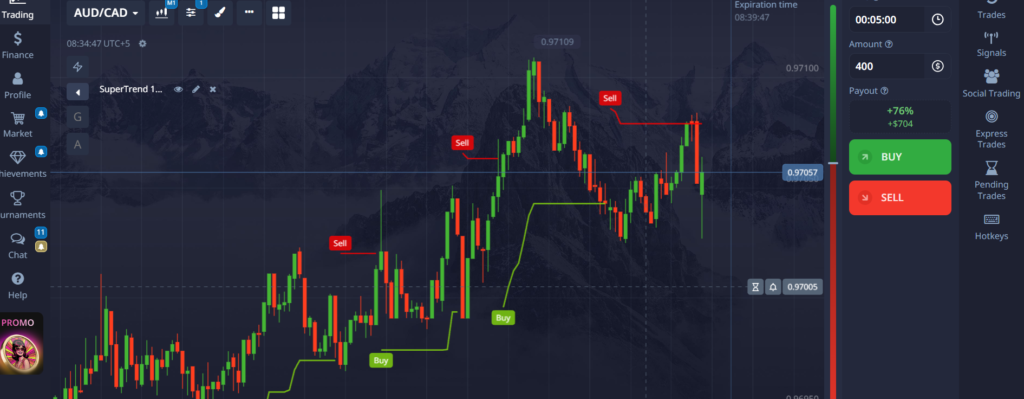
We never enter blindly. We wait for a complete candle close before confirming a buy or sell position.
Best Timeframes for Pocket Option Buy and Sell Strategy
For short-term traders, we recommend:
- 1-minute chart with 1–3 minute expiry
- 5-minute chart with 5–10 minute expiry
For smoother market movements:
- 15-minute chart with 15–30 minute expiry
Shorter timeframes require faster decision-making and strong discipline, while longer timeframes provide more stable setups.
Risk Management Rules for Consistent Profits
Even the best Pocket Option buy and sell strategy requires strict capital protection.
We apply:
- Risk only 2%–5% per trade
- Avoid martingale escalation
- Stop trading after 3 consecutive losses
- Set daily profit target (5%–10%)
Capital preservation ensures long-term survival and consistent growth.
Advanced Buy and Sell Strategy: Trend Pullback Entry
A powerful refinement is the trend pullback strategy.
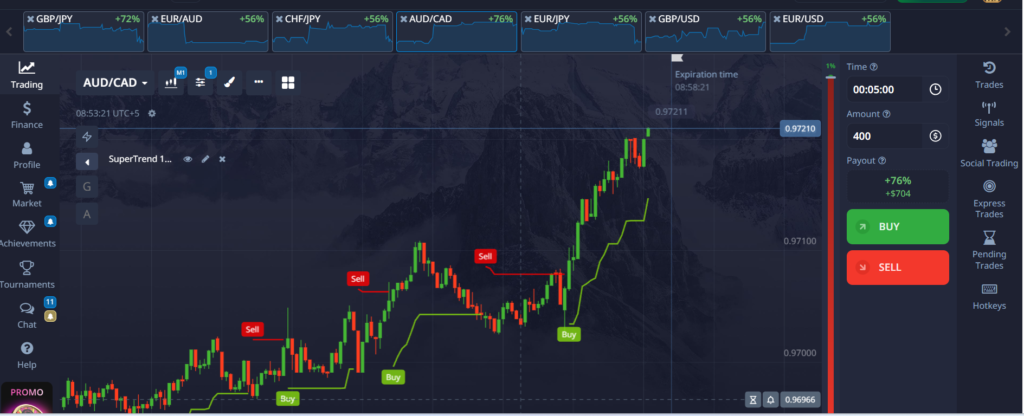
Buy Pullback Setup
- Strong uptrend confirmed.
- Price retraces to 50 MA.
- Bullish rejection candle forms.
- RSI remains above 40.
Sell Pullback Setup
- Strong downtrend confirmed.
- Price retraces to 50 MA.
- Bearish rejection candle forms.
- RSI remains below 60.
This method allows entry at better price levels with higher probability.
Psychology Behind Buy and Sell Success
Emotional discipline determines trading outcomes.
We eliminate:
- Revenge trading
- Overtrading
- Impulsive entries
- Emotional doubling
We follow structured rules without deviation. Consistency beats randomness.
High-Probability Asset Selection
We choose assets with:
- High payout percentage
- Clear trending behavior
- Strong volatility during active sessions
The best trading sessions are:
- London session
- New York session
- Overlap hours for higher liquidity
Avoid low-volatility periods and ranging markets unless trading support and resistance specifically.
Combining Indicators for Maximum Accuracy
The most powerful Pocket Option buy and sell strategy combines:
- Moving Averages (Trend)
- RSI (Momentum)
- Support & Resistance (Structure)
- Candlestick Patterns (Timing)
When all four align, we execute confidently.
This structured combination reduces guesswork and improves probability.
Common Mistakes to Avoid
To maintain consistency, we avoid:
- Trading during major news releases
- Ignoring trend direction
- Increasing lot size emotionally
- Entering before candle close
- Using too many indicators
Simplicity combined with precision produces better outcomes than cluttered charts.
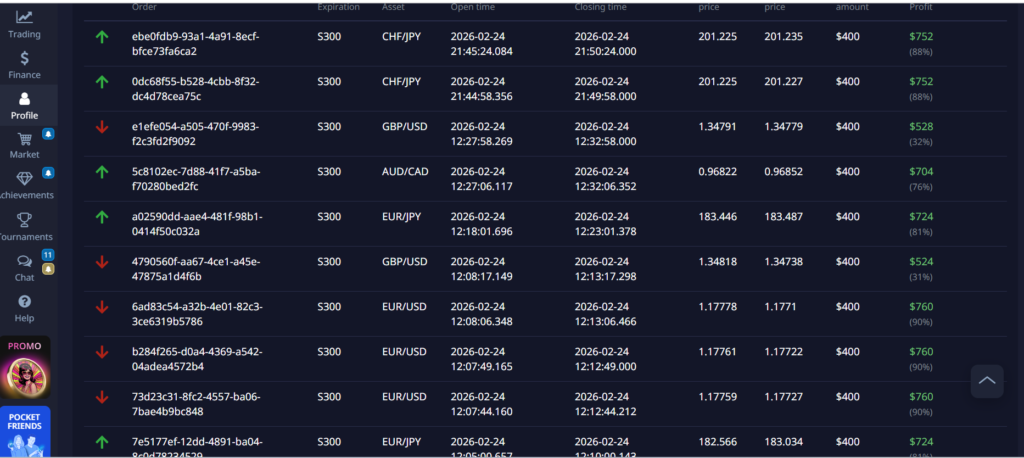
Daily Trading Plan for Buy and Sell Execution
A structured plan includes:
- Analyze trend on higher timeframe.
- Mark support and resistance.
- Wait for pullback.
- Confirm with RSI.
- Confirm with candlestick pattern.
- Execute trade.
- Record results.
Tracking performance improves future accuracy and identifies weak areas.
Conclusion: Structured Buy and Sell Strategy for Long-Term Results
A disciplined Pocket Option buy and sell strategy revolves around structure, patience, confirmation, and risk control. By aligning trend analysis, momentum confirmation, and precise candlestick timing, we position ourselves for higher-probability trades.
Success does not come from random entries. It comes from executing a system repeatedly with confidence and discipline.
When applied correctly, this strategy delivers consistency, control, and sustainable trading performance.
Leave a Reply